
Why Insurance Agencies End Up Using Too Many Software Tools
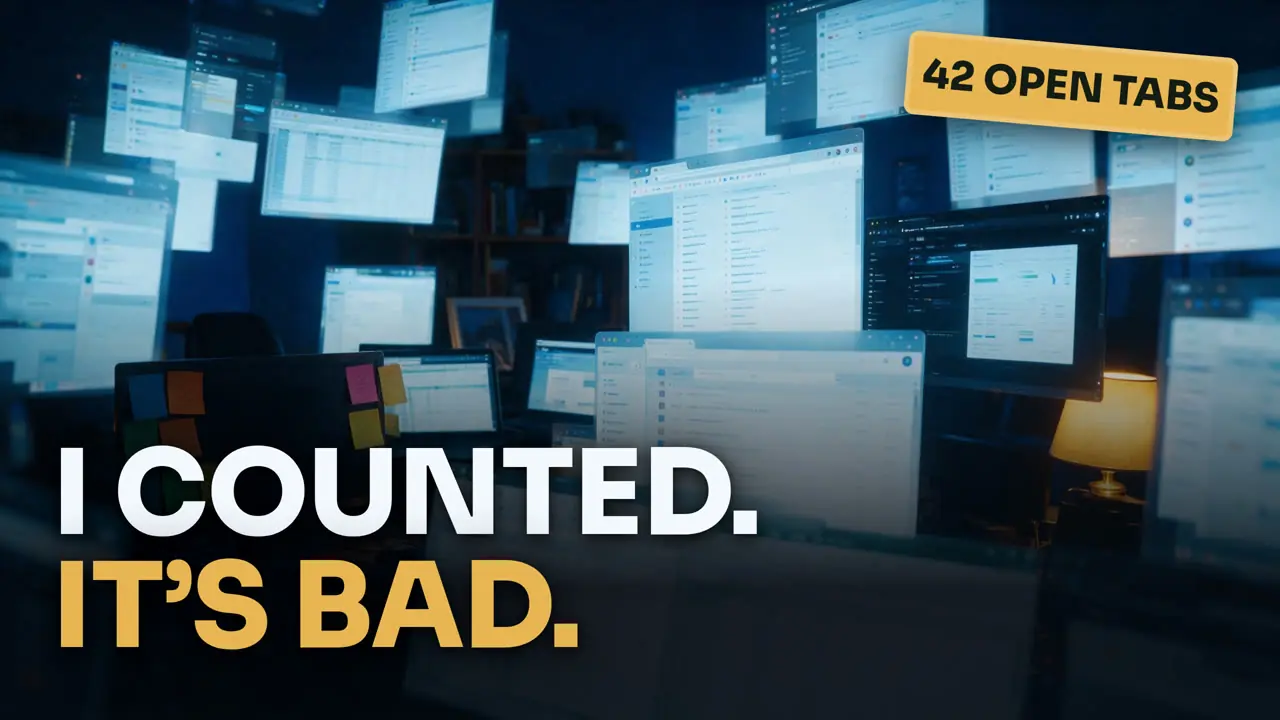
Nobody decides to run an agency on eight subscriptions. It happens one reasonable purchase at a time (a CRM here, a dialer there, an e-signature tool for one carrier's paperwork) until one night you count the logos on your credit card statement and realize you're managing software instead of clients. This is the story of that night, and of the question that took five browser tabs to answer.
Episode 1: I Was Paying for Too Many Tools to Run My Insurance Agency · 5:38
One client question, five systems
A good client calls: a family of four, two years on the books. One question: "Did you ever get that document I sent? And am I all set for next year?"
The email was in the inbox. Her file was in the CRM. The document was in neither, because she'd texted it to somebody's cell phone. Whether she was "all set for next year" depended on a renewal date that lived in a spreadsheet, because the CRM didn't really understand renewals. And her appointment history sat in a calendar that talked to none of them.
Everything was found. It usually is. But every answer was an investigation: two professionals playing detective across five systems while a client waited on hold.
It isn't the tools. It's the seams.
Here is the uncomfortable part: every one of those tools was fine. The CRM was fine, the phone system was fine, the email was fine. No vendor was lying. The problem lived between them: every seam between two tools is a place where information goes to hide, and an insurance agency is nothing but information with deadlines attached.
When systems don't talk to each other, a human becomes the integration layer. Every copy-paste, every "let me check and call you back," every re-typed phone number is a person doing a computer's job at an agent's hourly rate. The agent doesn't have a CRM problem; the agent has a fragmentation problem.
Why insurance can't absorb fragmentation
In a pure sales business you might survive the seams: close the deal, move on. Insurance is different: closing the policy is when the relationship starts. Renewals come back every year. Households grow, kids age off plans, someone's mother turns sixty-five. Each of those moments is a piece of information that has to survive the seams for years. A missed email is an inconvenience; a missed renewal is a client leaving quietly, and nobody sends an invoice for a missed renewal.
Find your fragmentation score
Whatever software you run, try this ten-minute exercise this week:
- Take one real client question from your voicemail.
- Trace it: count every tab, login, and device you touch to answer it completely.
- Write the number down. That's your fragmentation score.
Under 3: you're in better shape than most agencies. 5 or more: you're not disorganized: you're doing a computer's job by hand, and it costs more than any subscription would.
Key takeaways: tools can all be individually fine while the agency still bleeds time; the human-as-integration-layer cost never appears on an invoice; insurance amplifies fragmentation because relationships renew for years; measure the problem before shopping for solutions.
Frequently asked questions
Is consolidating tools always the right move?
No. At a small enough scale, a well-bent generic stack is a legitimate strategy. The tipping point is when answering routine client questions requires an investigation, that's when the seams cost more than a consolidated platform would.
What should "one place" actually include for an insurance agency?
The client's calls, texts, emails, documents, policies, and deadlines on one record. In ChronosCodex those are native to one platform: though feature availability and usage pricing vary by plan, so check current details on the pricing page.
Isn't this just an argument for buying more software?
The opposite: it's an argument for counting what you already juggle. The exercise above is useful whether or not you ever change systems: the product is optional; the measurement isn't.
Keep going
Next in the series: The Problem With Most Insurance CRMs: why a perfect client record still nearly lost a client. Related reading: why a single system of record beats five disconnected tools and the insurance CRM buyer's guide.
This story is based on real cases: details are composite and anonymized. The video's product screens show our real platform on demo data; narration is AI-assisted.
Por Qué las Agencias de Seguros Terminan Usando Demasiadas Herramientas
Nadie decide manejar una agencia con ocho suscripciones. Ocurre una compra razonable a la vez (un CRM aquí, un marcador allá, una herramienta de firma electrónica para los formularios de una aseguradora) hasta que una noche cuentas los logos en tu estado de cuenta y descubres que administras software en vez de clientes. Esta es la historia de esa noche, y de la pregunta que tomó cinco pestañas del navegador responder.
Episodio 1 (en inglés). I Was Paying for Too Many Tools to Run My Insurance Agency · 5:38
Una pregunta de cliente, cinco sistemas
Llama una buena clienta: familia de cuatro, dos años en la cartera. Una pregunta: "¿Recibieron el documento que envié? ¿Y estoy lista para el próximo año?"
El correo estaba en la bandeja de entrada. Su expediente, en el CRM. El documento en ninguno de los dos, porque lo envió por mensaje de texto al celular de alguien. Si estaba "lista para el próximo año" dependía de una fecha de renovación que vivía en una hoja de cálculo, porque el CRM no entendía realmente de renovaciones. Y su historial de citas estaba en un calendario que no hablaba con ninguno.
Todo se encontró. Casi siempre se encuentra. Pero cada respuesta fue una investigación: dos profesionales jugando al detective en cinco sistemas mientras una clienta esperaba en línea.
No son las herramientas. Son las costuras.
Aquí está lo incómodo: cada una de esas herramientas funcionaba bien. El CRM estaba bien, el teléfono estaba bien, el correo estaba bien. Ningún proveedor mentía. El problema vivía entre ellas: cada costura entre dos herramientas es un lugar donde la información se esconde, y una agencia de seguros no es más que información con fechas límite.
Cuando los sistemas no se comunican, un humano se convierte en la capa de integración. Cada copiar-y-pegar, cada "déjeme verificar y le devuelvo la llamada", cada número re-escrito es una persona haciendo el trabajo de una computadora al costo por hora de un agente. El agente no tiene un problema de CRM; tiene un problema de fragmentación.
Por qué los seguros no toleran la fragmentación
En un negocio de ventas puro quizás sobrevives a las costuras: cierras el trato y sigues. Los seguros son diferentes: cerrar la póliza es cuando la relación comienza. Las renovaciones vuelven cada año. Los hogares crecen, los hijos salen de los planes, la madre de alguien cumple sesenta y cinco. Cada uno de esos momentos es información que debe sobrevivir a las costuras durante años. Un correo perdido es una molestia; una renovación perdida es un cliente que se va en silencio, y nadie envía factura por una renovación perdida.
Calcula tu puntaje de fragmentación
Con el software que tengas hoy, prueba este ejercicio de diez minutos esta semana:
- Toma una pregunta real de un cliente de tu buzón de voz.
- Rastrea: cuenta cada pestaña, inicio de sesión y dispositivo que tocas para responderla por completo.
- Anota el número. Ese es tu puntaje de fragmentación.
Menos de 3: estás mejor que la mayoría de las agencias. 5 o más: no eres desorganizado: estás haciendo a mano el trabajo de una computadora, y cuesta más que cualquier suscripción.
Preguntas frecuentes
¿Consolidar herramientas es siempre lo correcto?
No. A cierta escala, un stack genérico bien adaptado es una estrategia legítima. El punto de quiebre es cuando responder preguntas rutinarias de clientes requiere una investigación: ahí las costuras cuestan más que una plataforma consolidada.
¿Qué debería incluir "un solo lugar" para una agencia de seguros?
Las llamadas, textos, correos, documentos, pólizas y fechas límite del cliente en un solo expediente. En ChronosCodex son nativos de una sola plataforma: aunque la disponibilidad de funciones y los precios de uso varían según el plan; consulta los detalles actuales en la página de precios.
¿No es esto solo un argumento para comprar más software?
Al contrario: es un argumento para contar lo que ya haces malabares. El ejercicio es útil aunque nunca cambies de sistema: el producto es opcional; la medición no.
Continúa la serie
Siguiente: El Problema de la Mayoría de los CRMs de Seguros. Lectura relacionada: por qué un solo sistema de registro supera a cinco herramientas desconectadas.
Esta historia se basa en casos reales: los detalles son compuestos y anónimos. Las pantallas del producto en el video muestran nuestra plataforma real con datos de demostración; la narración es asistida por IA. El video está en inglés.