
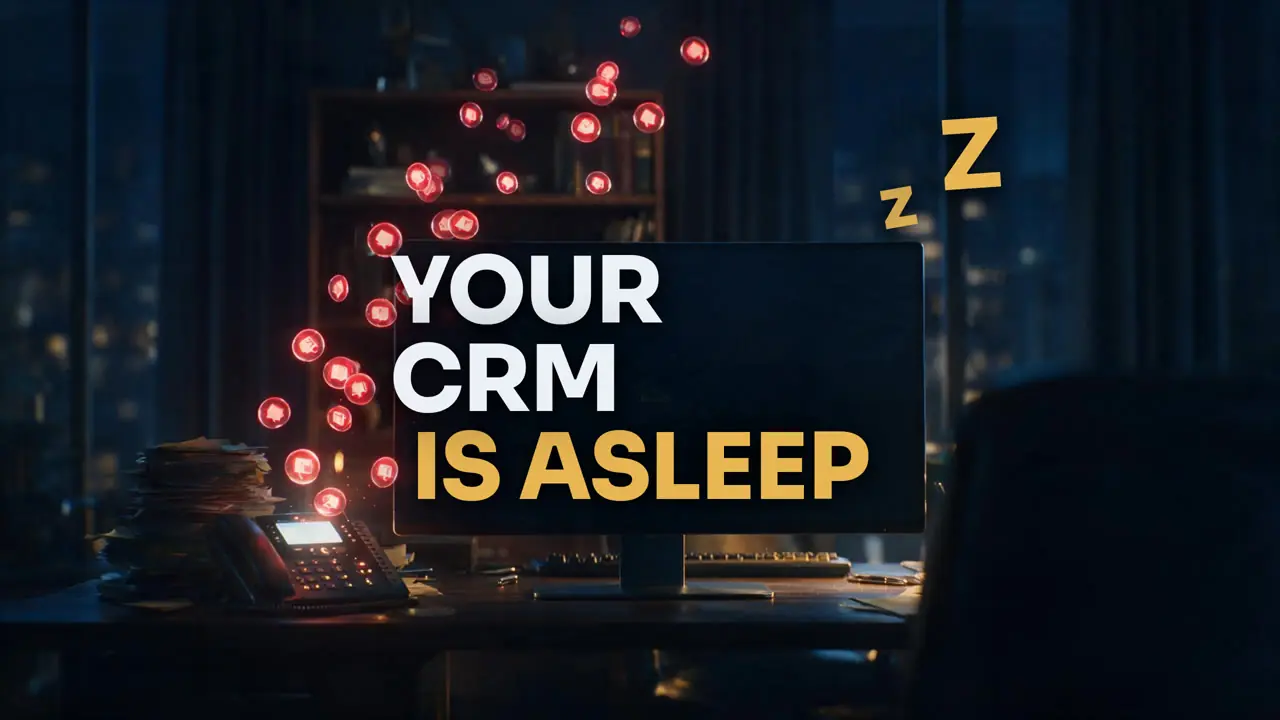
The Problem With Most Insurance CRMs: Storing Isn't Managing
The cleanest client record our agency ever kept (every phone number, every note dated, policy, carrier, premium, effective date) belonged to a client we nearly lost. His renewal window opened and nothing happened, because the date was stored beautifully in a field nobody was looking at that week. This is the design flaw almost every CRM shares, and a test you can run on yours this morning.
Episode 2: The Problem With Most Insurance CRMs · 4:15
A follow-up system made of human memory
When the client asked, a little hurt, "Were you going to reach out?", the honest answer was: we were going to reach out if somebody happened to remember to open his record during the right two weeks. That was the actual system: world-class data storage, and a follow-up mechanism made entirely of human memory.
Looking around the industry, that's not one bad product. It's the default design. The software is a filing cabinet with a search bar: it answers when spoken to, and it initiates nothing.
A computer can watch a date
Consider what "management" would actually mean. Renewal windows are dates. A client's birthday is a date. A kid aging off a plan, someone in the household turning sixty-four and a half: all of it is data the system already holds, plus arithmetic. The relationship work is human; knowing when the relationship needs work is math, and most agencies do that math in their heads.
If your CRM only becomes useful after you remember to open it, something is backwards. The software should be the one that remembers. You should be the one that calls.
The morning-screen test
Open your software right now and ask two questions:
- Is there any screen that tells me what needs attention today, without me searching for it?
- If yes: is it accurate enough that I actually look at it every morning?
If either answer is no, you don't have a CRM problem you can fix with more data entry. You have a design problem, and no amount of discipline out-disciplines a filing cabinet.
The honest duct-tape patch: a recurring weekly calendar block called "renewal sweep," where you filter your book by renewal date and call down the list. It works while you decide on something better.
Key takeaways: a perfect record can still lose a client; storage and management are different products; surfacing (the system raising its hand) is the feature to evaluate, not fields; test any CRM by what its morning screen volunteers.
Frequently asked questions
What does "surfacing" look like in practice?
A daily queue the system builds by watching your book: this renewal is approaching, this household hasn't heard from you in months, this person has a birthday. In ChronosCodex that's the Today view and its ranked action list, shown in the video on demo data.
Does automation replace the relationship work?
No, and it shouldn't try. The system's job is timing: knowing when a relationship needs attention. The call itself stays human.
My CRM has reminders. Isn't that the same thing?
Reminders you create manually still depend on a human remembering to create them. The test is what the system notices on its own from data it already holds.
Keep going
Previous: Why Agencies End Up Using Too Many Software Tools. Next: How to Choose a CRM for Your Insurance Agency. Related: renewal-season readiness checklist and the CRM automation playbook.
This story is based on real cases: details are composite and anonymized. The video's product screens show our real platform on demo data; narration is AI-assisted.
El Problema de la Mayoría de los CRMs de Seguros: Almacenar No Es Gestionar
El expediente de cliente más limpio que nuestra agencia jamás mantuvo (cada teléfono, cada nota con fecha, póliza, aseguradora, prima, fecha de vigencia) pertenecía a un cliente que casi perdemos. Su ventana de renovación se abrió y no pasó nada, porque la fecha estaba bellamente almacenada en un campo que nadie miró esa semana. Este es el defecto de diseño que comparten casi todos los CRMs, y una prueba que puedes hacerle al tuyo esta mañana.
Episodio 2 (en inglés). The Problem With Most Insurance CRMs · 4:15
Un sistema de seguimiento hecho de memoria humana
Cuando el cliente preguntó, algo dolido, "¿Pensaban contactarme?", la respuesta honesta era: íbamos a contactarlo si alguien recordaba abrir su expediente durante las dos semanas correctas. Ese era el sistema real: almacenamiento de datos de clase mundial, y un mecanismo de seguimiento hecho enteramente de memoria humana.
Mirando la industria, no es un mal producto aislado. Es el diseño por defecto. El software es un archivero con barra de búsqueda: responde cuando le hablan, y no inicia nada.
Una computadora puede vigilar una fecha
Piensa qué significaría realmente "gestionar". Las ventanas de renovación son fechas. El cumpleaños de un cliente es una fecha. Un hijo saliendo del plan, alguien del hogar cumpliendo sesenta y cuatro años y medio: todo es información que el sistema ya tiene, más aritmética. El trabajo de relación es humano; saber cuándo la relación necesita trabajo es matemática, y la mayoría de las agencias hace esa matemática de memoria.
Si tu CRM solo se vuelve útil después de que recuerdas abrirlo, algo está al revés. El software debería ser el que recuerda. Tú deberías ser quien llama.
La prueba de la pantalla matutina
Abre tu software ahora mismo y hazte dos preguntas:
- ¿Hay alguna pantalla que me diga qué necesita atención hoy, sin que yo busque?
- Si la hay. ¿es lo bastante precisa como para mirarla cada mañana?
Si alguna respuesta es no, no tienes un problema de CRM que se arregle con más captura de datos. Tienes un problema de diseño, y ninguna disciplina le gana a un archivero.
El parche honesto de cinta adhesiva: un bloque semanal recurrente en el calendario llamado "barrido de renovaciones", donde filtras tu cartera por fecha de renovación y llamas la lista completa. Funciona mientras decides algo mejor.
Preguntas frecuentes
¿Cómo se ve el "surfacing" (aflorar) en la práctica?
Una cola diaria que el sistema construye vigilando tu cartera: esta renovación se acerca, este hogar no sabe de ti hace meses, esta persona cumple años. En ChronosCodex es la vista Today y su lista de acciones priorizadas, mostrada en el video con datos de demostración.
¿La automatización reemplaza el trabajo de relación?
No, y no debería intentarlo. El trabajo del sistema es el momento: saber cuándo una relación necesita atención. La llamada sigue siendo humana.
Mi CRM tiene recordatorios. ¿No es lo mismo?
Los recordatorios que creas manualmente dependen de que un humano recuerde crearlos. La prueba es qué nota el sistema por sí solo con datos que ya tiene.
Continúa la serie
Anterior: Por Qué las Agencias Usan Demasiadas Herramientas. Siguiente: Cómo Elegir un CRM para tu Agencia.
Esta historia se basa en casos reales: los detalles son compuestos y anónimos. Las pantallas del producto muestran nuestra plataforma real con datos de demostración; la narración es asistida por IA. El video está en inglés.